









AstraZeneca Logo

  • Introduction
  • Biomarker Testing in Lung Cancer
  • Technical Considerations
  • iD Podcasts
  • Resources & Links
  • FAQs
iD.Lung Logo
menu

Resources
and Links

Use the contents below to
navigate the resources and links

Fact sheets

Videos

PD-L1 analysis training

Guidelines

Fact sheets

Advances in NSCLC biopsy, re-biopsy and biomarker testing

PD-L1 testing in lung cancer fact icon

Tissue and liquid biopsies remain essential for guiding biomarker testing and treatment decisions in NSCLC. This fact sheet highlights the importance of re-biopsy, advancements in biopsy technology (including AI and robotic-assisted techniques), and strategies to overcome common challenges in obtaining sufficient tissue.

Download this infographic

Veeva ID: Z4-77505 | Date of preparation: September 2025

Which biomarker tests should a patient with metastatic NSCLC receive?

PD-L1 testing in lung cancer fact icon

Predictive biomarker testing aims to match patients with the most appropriate treatment for their tumour. This fact sheet describes the different biomarker tests recommended in NSCLC.

Download this fact sheet

Veeva ID: Z4-60103 | Date of preparation: December 2023

Tissue sampling for PD-L1 testing in lung cancer

PD-L1 testing in lung cancer fact icon

In order to carry out PD-L1 testing, appropriate samples are required; the way in which these samples are obtained and processed can impact the success of PD-L1 testing. This fact sheet provides an overview of the different samples appropriate for PD-L1 testing in lung cancer.

Download this fact sheet

Veeva ID: Z4-60107 | Date of preparation: December 2023

Why should PD-L1 testing be used in NSCLC?

PD-L1 testing in lung cancer fact icon

PD-L1 testing is recommended in all tumour samples from patients with NSCLC. Further,
anti-PD-L1 immunotherapy has been associated with clinical benefit in patients with NSCLC. This fact sheet explains the importance of PD-L1 testing in NSCLC and treatment decision implications.

Download this fact sheet

Veeva ID: Z4-60105 | Date of preparation: December 2023

Concordance of PD-L1 IHC
tests in NSCLC

PD-L1 testing in lung cancer fact icon

Several IHC assays for detecting PD-L1 in NSCLC tumours are commercially available. This fact sheet describes the different PD-L1 IHC assays and the concordance between them.

Download this fact sheet

Veeva ID: Z4-60110 | Date of preparation: December 2023

VENTANA PD-L1 SP263 Assay
microscope scoring aid

PD-L1 testing in lung cancer fact icon

This fact sheet provides practical guidance for determining the percentage of tumour cells with positive staining for PD-L1 in NSCLC samples.

Download this fact sheet

Veeva ID: Z4-60133 | Date of preparation: December 2023

Videos

Application and implementation of ctDNA testing in NSCLC

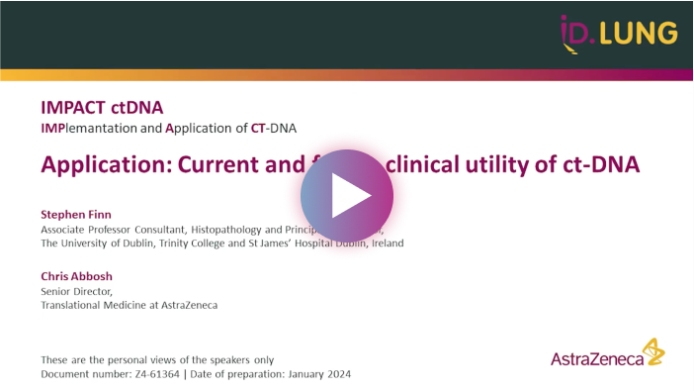
Application: current and future clinical utility of ctDNA

Application: current and future
clinical utility of ctDNA

Description: Dr Stephen Finn and Chris Abbosh
provide an overview of ctDNA testing techniques, and discuss when ctDNA testing can be used to inform
clinical decision making for patients with NSCLC.

Veeva ID: Z4-61364 | Date of preparation: January 2024

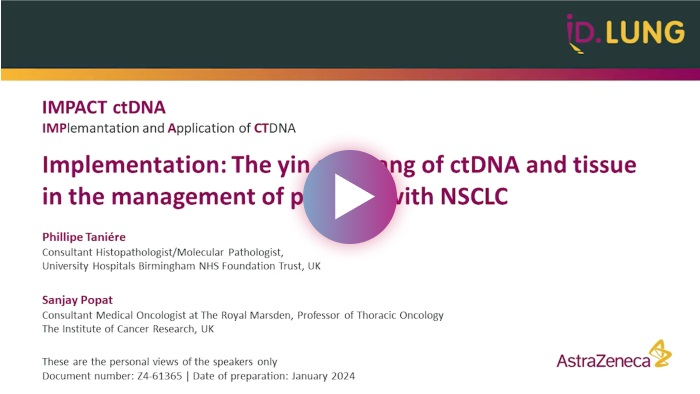
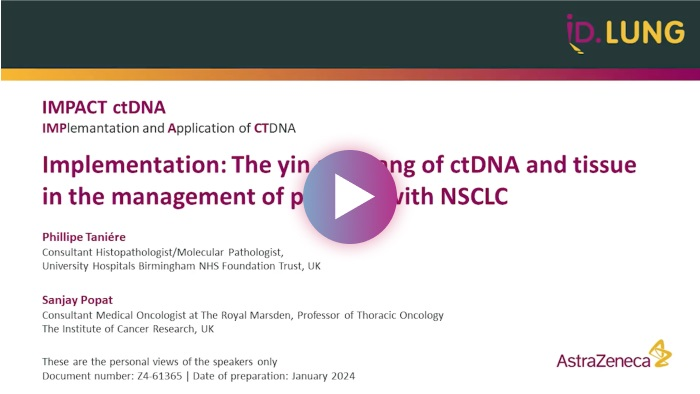
Implementation: the Yin and Yang of ctDNA and tissue in the management of patients with NSCLC

Implementation: the Yin and Yang of ctDNA and tissue in the management of patients with NSCLC

Description: Dr Phillipe Taniére and Prof. Sanjay Popat discuss how ctDNA and tissue can be used in a complementary fashion, and comment on the technical challenges associated with sample acquisition in NSCLC.

Veeva ID: Z4-61365 | Date of preparation: January 2024

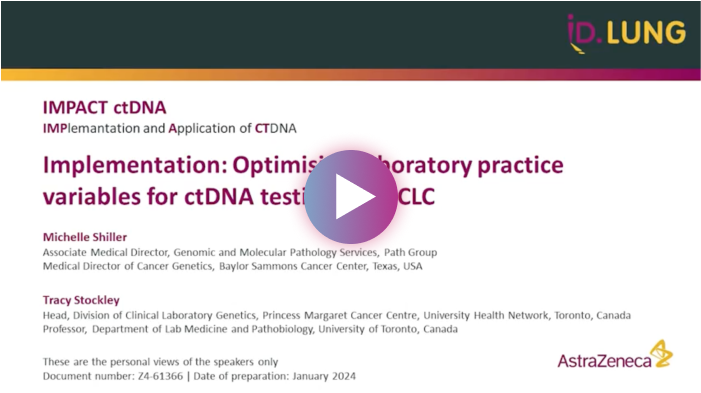
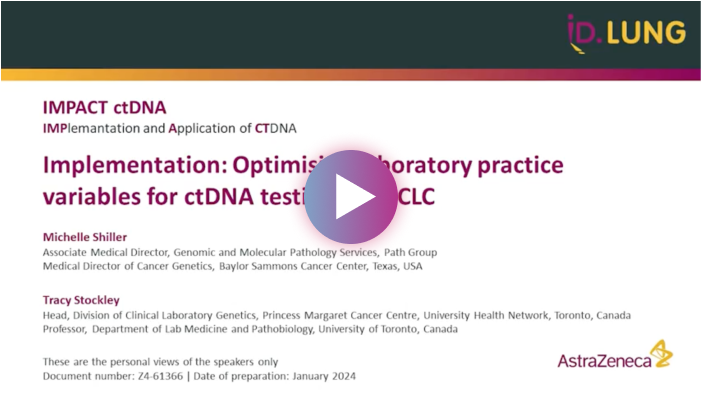
Implementation: optimising practise variables for ctDNA testing in NSCLC

Implementation: optimising practise variables for ctDNA testing in NSCLC

Description: Dr Michelle Shiller shares her perspective on the management of analytical and pre-analytical variables associated with ctDNA testing. Using four case studies, Dr Tracy Stockley discusses the interpretation of molecular test reports generated from ctDNA tests.

Veeva ID: Z4-61366 | Date of preparation: January 2024

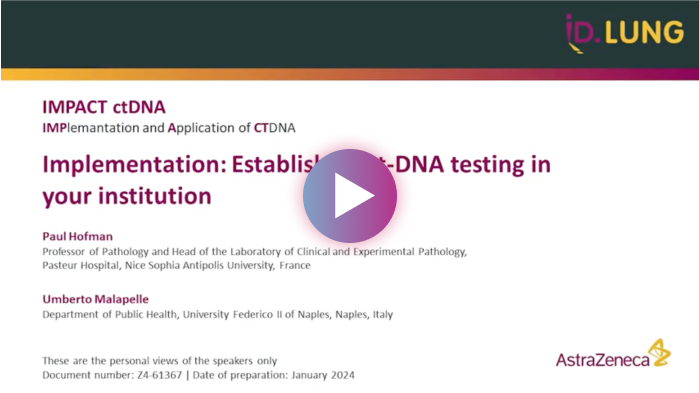
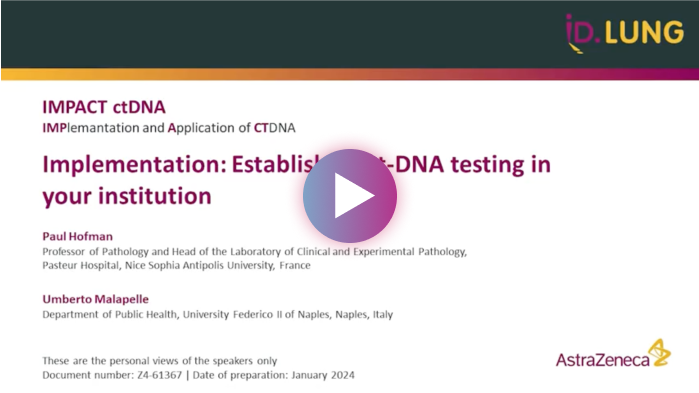
Implementation: establishing ctDNA testing in your institution

Implementation: establishing ctDNA testing in your institution

Description: Prof. Paul Hofman and Prof. Umberto Malapelle recount their experience of introducing liquid biopsy into their respective institutions, and discuss the variables that their teams considered when developing their testing methodologies.

Veeva ID: Z4-61367 | Date of preparation: January 2024


The utility of reflex testing in NSCLC

Reflex testing: what it is & the clinical utility it provides

Reflex testing: what it is & the clinical utility it provides

Description: Prof. Brendon Stiles, Prof. Marina Garassino, Prof. John Gosney, and Dr Juan Botero provide an introduction to reflex testing, and share how the implementation of reflex testing may enhance patient care, and improve ways of working in clinical institutions.

Veeva ID: Z4-61368 | Date of preparation: January 2024

Reflex testing: practical considerations around implementation

Reflex testing: practical considerations around implementation

Description: Prof. Brendon Stiles, Prof. Marina Garassino, Prof. John Gosney, and Dr Juan Botero
reflect on their experience with implementing reflex
testing in their institutions. With a focus on the use of reflex testing in early-stage NSCLC, the experts discuss how the multidisciplinary team can work together to implement effective sample acquisition, and tissue stewardship practices.

Veeva ID: Z4-61369 | Date of preparation: January 2024

Reflex testing: challenges and solutions

Reflex testing: challenges and solutions

Description: Prof. Brendon Stiles, Prof. Marina Garassino, Prof. John Gosney, and Dr Juan Botero share their perspectives on how to overcome challenges
related to reflex testing, including sample acquisition, and test reimbursement.

Veeva ID: Z4-61370 | Date of preparation: January 2024


EBUS guides for interventional bronchoscopists

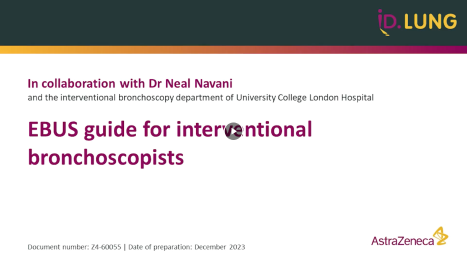
EBUS guide for interventional bronchoscopists

EBUS guide for interventional bronchoscopists

Description: This instructional animation provides expert guidance from Dr Neal Navani on safely and optimally performing EBUS-TBNA.

Veeva ID: Z4-60055 | Date of preparation: December 2023

EBUS guide for interventional bronchoscopists part 1

EBUS guide for interventional bronchoscopists part 1

Description: Dr Neal Navani provides an overview of the role of EBUS-TBNA in lung cancer.

Veeva ID: Z4-61362 | Date of preparation: January 2024

EBUS guide for interventional bronchoscopists part 2

EBUS guide for interventional bronchoscopists part 2

Description: Dr Neal Navani shares procedural tips for enhancing the yield of EBUS-TBNA.

Veeva ID: Z4-61363 | Date of preparation: January 2024


PD-L1 testing in NSCLC

The role of PD-L1 testing for immunotherapy

The role of PD-L1 testing for immunotherapy

Description: Professor Patrick Pauwels discusses how PD-L1 testing can be used to predict response to immunotherapy.

Veeva ID: Z4-60139 | Date of preparation: December 2023

The potential interchangeability of validated PD-L1 assays

The potential interchangeability of validated PD-L1 assays

Description: Professor Keith Kerr discusses how validated PD-L1 assays may potentially be interchangeable.

Veeva ID: Z4-60140 | Date of preparation: December 2023

The concordance of PD-L1 assays in NSCLC

The concordance of PD-L1
assays in NSCLC

Description: An animated overview of the concordance of different PD-L1 assays in NSCLC tumor samples.

Veeva ID: Z4-60142 | Date of preparation: December 2023

The validation of PD-L1 LDTs

The validation of PD-L1 LDTs

Description: Professor Keith Kerr discusses the need to properly validate laboratory-developed tests for PD-L1 expression.

Veeva ID: Z4-60143 | Date of preparation: December 2023

The use of cytology simples for PD-L1 testing

The use of cytology samples

for PD-L1 testing

Description: Professor Keith Kerr discusses whether cytology samples can be used for PD-L1 testing.

Veeva ID: Z4-60144 | Date of preparation: December 2023

The issue of borderline PD-L1 expression interpretation

The issue of borderline PD-L1
expression interpretation

Description: Professor Keith Kerr discusses how borderline PD-L1 expression can be interpreted.

Veeva ID: Z4-60145 | Date of preparation: December 2023

VENTANA PD-L1 (SP263) NSCLC Assay overview

VENTANA PD-L1 (SP263) NSCLC
Assay overview

Description: In this introductory educational module,
Dr Dorothy Hayden (Pathologist, Roche Companion Diagnostics), provides an overview of the VENTANA
PD-L1 (SP263) Assay for staining NSCLC samples.

Veeva ID: Z4-60605 | Date of preparation: December 2023

VENTANA PD-L1 (SP263) NSCLC Assay evaluation

VENTANA PD-L1 (SP263) NSCLC
Assay evaluation

Description: This module provides more detail on NSCLC sample evaluation following staining with the VENTANA PD-L1 (SP263) Assay.

Veeva ID: Z4-60608 | Date of preparation: December 2023

VENTANA PD-L1 (SP263) NSCLC Assay guided digital case review

VENTANA PD-L1 (SP263) NSCLC
Assay guided digital case review

Description: In this concluding module, Dr Hayden provides an in-depth, guided digital case review of samples stained with the VENTANA PD-L1
(SP263) Assay.

Veeva ID: Z4-60610 | Date of preparation: December 2023


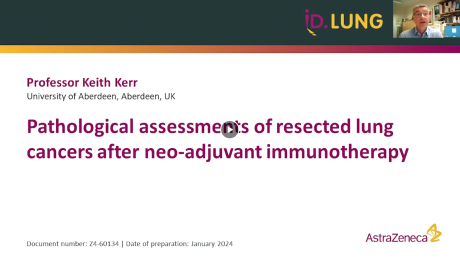
Pathological complete response and major pathological response in NSCLC

Pathological assessments of resected lung cancers after neoadjuvant immunotherapy

Pathological assessments of resected lung cancers after neoadjuvant immunotherapy

Description: Professor Keith Kerr discusses how to assess resected tumours to understand the pathological response to neoadjuvant treatment.

Veeva ID: Z4-60134 | Date of preparation: January 2024

Video on overview of pathological complete response and major pathological response in lung cancer

Overview of pathological complete response and major pathological response in lung cancer

Description: Dr Ángeles Montero-Fernández discusses practical considerations regarding the implementation of pCR and MPR in clinical practice, providing an overview of the diagnostic journey, from the pCR request form to the management of specimens, as well as discussing how pCR and MPR may inform treatment decisions for patients with early-stage NSCLC.

Veeva ID: Z4-66632 | Date of preparation: November 2024

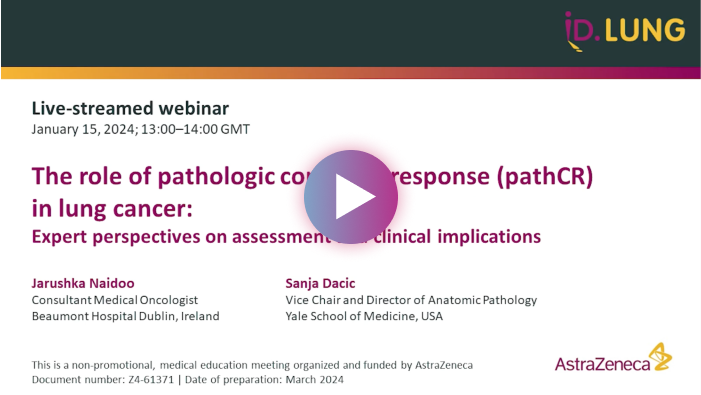
Video on the role of pathCR in lung cancer: expert perspectives on assessment and clinical implication

The role of pathCR in lung cancer: expert perspectives on assessment and clinical implication

Description: Professor Jarushka Naidoo discusses how pCR can be used to assess response to neoadjuvant therapy. Professor Sanja Dacic shares a pathologist’s perspective on assessing pCR, and compares the IASLC and irPRC criteria for pathologic response.

Veeva ID: Z4-61371 | Date of preparation: March 2024


Biomarker testing in NSCLC

Video on the importance of obtaining all biomarker test results before starting treatment for NSCLC

The importance of obtaining all biomarker test results before starting treatment for NSCLC

Description: Dr Federico Cappuzzo discusses why the results of biomarker tests should be obtained prior to starting treatment for NSCLC.

Veeva ID: Z4-60054 | Date of preparation: December 2023

Video on Biomarker testing in patients with resectable NSCLC: clinical staging and biopsy site selection

Biomarker testing in patients with resectable NSCLC: clinical staging and biopsy site selection

Description: Dr Neal Navani provides a perspective on the guiding principles for clinical staging and optimal biopsy site selection.

Veeva ID: Z4-63486 | Date of preparation: July 2024

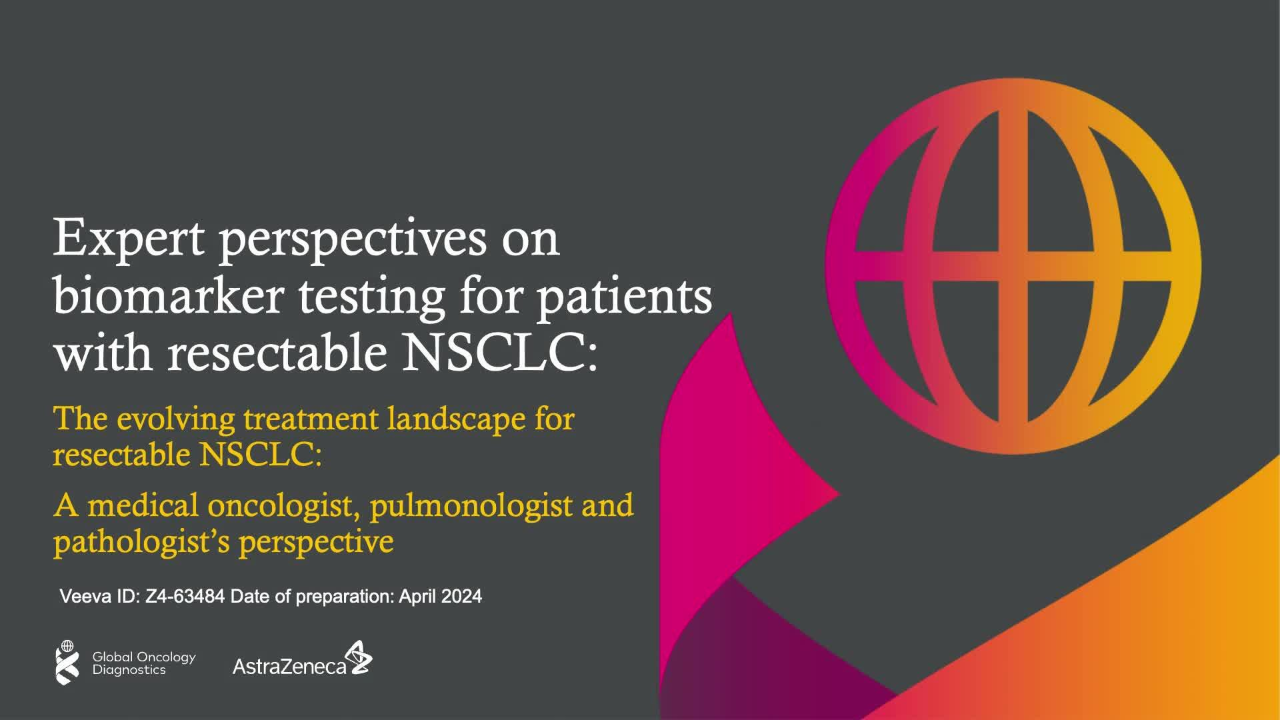
Video on Biomarker testing in patients with resectable NSCLC: The evolving patient journey

Biomarker testing in patients with resectable NSCLC: The evolving patient journey

Description: Professor Sanjay Popat, Dr Neal Navani, and Dr Ángeles Montero-Fernández share their perspectives on the evolving patient journey for resectable NSCLC.

Veeva ID: Z4-63484 | Date of preparation: April 2024

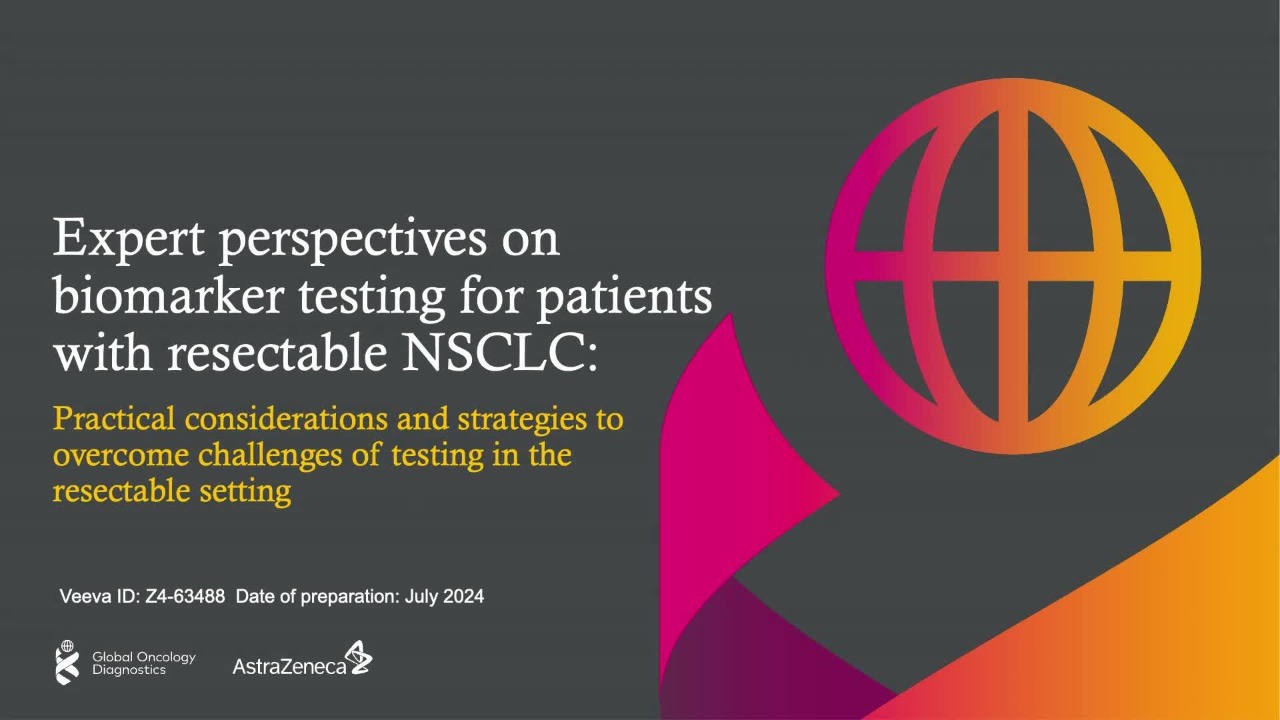
Video on Biomarker testing in patients with resectable NSCLC: practical considerations to overcome challenges

Biomarker testing in patients with resectable NSCLC: practical considerations to overcome challenges

Description: Professor Sanjay Popat, Dr Neal Navani, and Dr Ángeles Montero discuss practical considerations and strategies to overcome the challenges of biomarker testing in the resectable setting.

Veeva ID: Z4-63488 | Date of preparation: July 2024

Application: current and future clinical utility of ctDNA

Application: current and future
clinical utility of ctDNA

Description: Dr Stephen Finn and Chris Abbosh
provide an overview of ctDNA testing techniques, and discuss when ctDNA testing can be used to inform
clinical decision making for patients with NSCLC.

Veeva ID: Z4-61364 | Date of preparation: January 2024

Implementation: the Yin and Yang of ctDNA and tissue in the management of patients with NSCLC

Implementation: the Yin and Yang of ctDNA and tissue in the management of patients with NSCLC

Description: Dr Phillipe Taniére and Prof. Sanjay Popat discuss how ctDNA and tissue can be used in a complementary fashion, and comment on the technical challenges associated with sample acquisition in NSCLC.

Veeva ID: Z4-61365 | Date of preparation: January 2024

Implementation: optimising practise variables for ctDNA testing in NSCLC

Implementation: optimising practise variables for ctDNA testing in NSCLC

Description: Dr Michelle Shiller shares her perspective on the management of analytical and pre-analytical variables associated with ctDNA testing. Using four case studies, Dr Tracy Stockley discusses the interpretation of molecular test reports generated from ctDNA tests.

Veeva ID: Z4-61366 | Date of preparation: January 2024

Implementation: establishing ctDNA testing in your institution

Implementation: establishing ctDNA testing in your institution

Description: Prof. Paul Hofman and Prof. Umberto Malapelle recount their experience of introducing liquid biopsy into their respective institutions, and discuss the variables that their teams considered when developing their testing methodologies.

Veeva ID: Z4-61367 | Date of preparation: January 2024


Reflex testing: what it is & the clinical utility it provides

Reflex testing: what it is & the clinical utility it provides

Description: Prof. Brendon Stiles, Prof. Marina Garassino, Prof. John Gosney, and Dr Juan Botero provide an introduction to reflex testing, and share how the implementation of reflex testing may enhance patient care, and improve ways of working in clinical institutions.

Veeva ID: Z4-61368 | Date of preparation: January 2024

Reflex testing: practical considerations around implementation

Reflex testing: practical considerations around implementation

Description: Prof. Brendon Stiles, Prof. Marina Garassino, Prof. John Gosney, and Dr Juan Botero
reflect on their experience with implementing reflex
testing in their institutions. With a focus on the use of reflex testing in early-stage NSCLC, the experts discuss how the multidisciplinary team can work together to implement effective sample acquisition, and tissue stewardship practices.

Veeva ID: Z4-61369 | Date of preparation: January 2024

Reflex testing: challenges and solutions

Reflex testing: challenges and solutions

Description: Prof. Brendon Stiles, Prof. Marina Garassino, Prof. John Gosney, and Dr Juan Botero share their perspectives on how to overcome challenges
related to reflex testing, including sample acquisition, and test reimbursement.

Veeva ID: Z4-61370 | Date of preparation: January 2024


EBUS guide for interventional bronchoscopists

EBUS guide for interventional bronchoscopists

Description: This instructional animation provides expert guidance from Dr Neal Navani on safely and optimally performing EBUS-TBNA.

Veeva ID: Z4-60055 | Date of preparation: December 2023

EBUS guide for interventional bronchoscopists part 1

EBUS guide for interventional bronchoscopists part 1

Description: Dr Neal Navani provides an overview of the role of EBUS-TBNA in lung cancer.

Veeva ID: Z4-61362 | Date of preparation: January 2024

EBUS guide for interventional bronchoscopists part 2

EBUS guide for interventional bronchoscopists part 2

Description: Dr Neal Navani shares procedural tips for enhancing the yield of EBUS-TBNA.

Veeva ID: Z4-61363 | Date of preparation: January 2024


The role of PD-L1 testing for immunotherapy

The role of PD-L1 testing for immunotherapy

Description: Professor Patrick Pauwels discusses how PD-L1 testing can be used to predict response to immunotherapy.

Veeva ID: Z4-60139 | Date of preparation: December 2023

The potential interchangeability of validated PD-L1 assays

The potential interchangeability of validated PD-L1 assays

Description: Professor Keith Kerr discusses how validated PD-L1 assays may potentially be interchangeable.

Veeva ID: Z4-60140 | Date of preparation: December 2023

The concordance of PD-L1 assays in NSCLC

The concordance of PD-L1
assays in NSCLC

Description: An animated overview of the concordance of different PD-L1 assays in NSCLC tumor samples.

Veeva ID: Z4-60142 | Date of preparation: December 2023

The validation of PD-L1 LDTs

The validation of PD-L1 LDTs

Description: Professor Keith Kerr discusses the need to properly validate laboratory-developed tests for PD-L1 expression.

Veeva ID: Z4-60143 | Date of preparation: December 2023

The use of cytology simples for PD-L1 testing

The use of cytology samples

for PD-L1 testing

Description: Professor Keith Kerr discusses whether cytology samples can be used for PD-L1 testing.

Veeva ID: Z4-60144 | Date of preparation: December 2023

The issue of borderline PD-L1 expression interpretation

The issue of borderline PD-L1
expression interpretation

Description: Professor Keith Kerr discusses how borderline PD-L1 expression can be interpreted.

Veeva ID: Z4-60145 | Date of preparation: December 2023

VENTANA PD-L1 (SP263) NSCLC Assay overview

VENTANA PD-L1 (SP263) NSCLC
Assay overview

Description: In this introductory educational module,
Dr Dorothy Hayden (Pathologist, Roche Companion Diagnostics), provides an overview of the VENTANA
PD-L1 (SP263) Assay for staining NSCLC samples.

Veeva ID: Z4-60605 | Date of preparation: December 2023

VENTANA PD-L1 (SP263) NSCLC Assay evaluation

VENTANA PD-L1 (SP263) NSCLC
Assay evaluation

Description: This module provides more detail on NSCLC sample evaluation following staining with the VENTANA PD-L1 (SP263) Assay.

Veeva ID: Z4-60608 | Date of preparation: December 2023

VENTANA PD-L1 (SP263) NSCLC Assay guided digital case review

VENTANA PD-L1 (SP263) NSCLC
Assay guided digital case review

Description: In this concluding module, Dr Hayden provides an in-depth, guided digital case review of samples stained with the VENTANA PD-L1
(SP263) Assay.

Veeva ID: Z4-60610 | Date of preparation: December 2023


Pathological assessments of resected lung cancers after neoadjuvant immunotherapy

Pathological assessments of resected lung cancers after neoadjuvant immunotherapy

Description: Professor Keith Kerr discusses how to assess resected tumours to understand the pathological response to neoadjuvant treatment.

Veeva ID: Z4-60134 | Date of preparation: January 2024

Video on overview of pathological complete response and major pathological response in lung cancer

Overview of pathological complete response and major pathological response in lung cancer

Description: Dr Ángeles Montero-Fernández discusses practical considerations regarding the implementation of pCR and MPR in clinical practice, providing an overview of the diagnostic journey, from the pCR request form to the management of specimens, as well as discussing how pCR and MPR may inform treatment decisions for patients with early-stage NSCLC.

Veeva ID: Z4-66632 | Date of preparation: November 2024

Video on the role of pathCR in lung cancer: expert perspectives on assessment and clinical implication

The role of pathCR in lung cancer: expert perspectives on assessment and clinical implication

Description: Professor Jarushka Naidoo discusses how pCR can be used to assess response to neoadjuvant therapy. Professor Sanja Dacic shares a pathologist’s perspective on assessing pCR, and compares the IASLC and irPRC criteria for pathologic response.

Veeva ID: Z4-61371 | Date of preparation: March 2024


Video on the importance of obtaining all biomarker test results before starting treatment for NSCLC

The importance of obtaining all biomarker test results before starting treatment for NSCLC

Description: Dr Federico Cappuzzo discusses why the results of biomarker tests should be obtained prior to starting treatment for NSCLC.

Veeva ID: Z4-60054 | Date of preparation: December 2023

Video on Biomarker testing in patients with resectable NSCLC: clinical staging and biopsy site selection

Biomarker testing in patients with resectable NSCLC: clinical staging and biopsy site selection

Description: Dr Neal Navani provides a perspective on the guiding principles for clinical staging and optimal biopsy site selection.

Veeva ID: Z4-63486 | Date of preparation: July 2024

Video on Biomarker testing in patients with resectable NSCLC: The evolving patient journey

Biomarker testing in patients with resectable NSCLC: The evolving patient journey

Description: Professor Sanjay Popat, Dr Neal Navani, and Dr Ángeles Montero-Fernández share their perspectives on the evolving patient journey for resectable NSCLC.

Veeva ID: Z4-63484 | Date of preparation: April 2024

Video on Biomarker testing in patients with resectable NSCLC: practical considerations to overcome challenges

Biomarker testing in patients with resectable NSCLC: practical considerations to overcome challenges

Description: Professor Sanjay Popat, Dr Neal Navani, and Dr Ángeles Montero discuss practical considerations and strategies to overcome the challenges of biomarker testing in the resectable setting.

Veeva ID: Z4-63488 | Date of preparation: July 2024


PD-L1 analysis training

PD-L1 e-trainer tool

Analyse biopsy slides and compare your scores with the consensus score for PD-L1.

Explore more

Veeva ID: Z4-61155 | Date of preparation: January 2024

VENTANA Pathology Education Portal

The VENTANA Pathology Education portal contains various online courses to aid in the interpretation of PD-L1 sections stained with the SP142 and SP263 assays.

Explore more


PD-L1 IHC 22C3 pharmDx Interpretation Training Program

The PD-L1 IHC 22C3 pharmDx Interpretation Training Program provides information on understanding the core principles of PD-L1 pathology, evaluating and scoring stained samples for PD-L1 expression.

Explore more


PD-L1 IHC 28-8 pharmDx Interpretation Training

PD-L1 IHC 28-8 pharmDx Interpretation Training involves the use of a virtual microscope to evaluate samples stained with PD-L1 IHC 28-8 pharmDx

Explore more


VENTANA PD-L1 (SP263)

NSCLC Assay overview

In this introductory educational module, 

Dr Dorothy Hayden (Pathologist, Roche Companion Diagnostics), provides an overview of the VENTANA PD-L1 (SP263) Assay for staining NSCLC samples.

Explore more

Veeva ID: Z4-60605 | Date of preparation: December 2023

VENTANA PD-L1 (SP263)

NSCLC Assay evaluation

This module provides more detail on NSCLC sample evaluation following staining with the VENTANA PD-L1 (SP263) Assay.

Explore more

Veeva ID: Z4-60608 | Date of preparation: December 2023

VENTANA PD-L1 (SP263)

NSCLC Assay guided digital case review

In this concluding module, Dr Hayden provides an in-depth, guided digital case review of samples stained with the VENTANA PD-L1 (SP263) Assay.

Explore more

Veeva ID: Z4-60610 | Date of preparation: December 2023

Guidelines

ASCO

The ASCO Clinical Practice Guidelines on NSCLC contains expert recommendations for the systemic therapy for Stage I–IIIA and Stage IV (with and without driver mutations) NSCLC.

To view the latest ASCO Clinical Practice Guideline on NSCLC, click here.

ESMO

The ESMO Clinical Practice Guidelines on NSCLC are a set of recommendations derived from recent studies and analyses that advise on the treatment and management of early-stage/locally advanced (non-metastatic) and metastatic NSCLC.

To view the latest ESMO Clinical Practice Guidelines on NSCLC, click here.

CAP-ACP

CAP-ACP proposed a guideline on PD-L1 biomarker testing for patient selection in immune-oncology.

To view the CAP-ACP guidelines, click here.

NCCN
Guidelines

The NCCN Guidelines for NSCLC are a series of recommendations for the risk assessment, evaluation and treatment of patients with NSCLC.

To view the latest NCCN Guidelines for NSCLC, click here.

CSCO-ESMO

CSCO and ESMO convened a special set of Pan-Asia Clinical Practice Guidelines for the diagnosis, treatment and follow-up of metastatic NSCLC. Adapted from the ESMO guidelines, this
Pan-Asian version has also been endorsed by oncology societies: JSMO, KSMO, MOS, SSO, and TOS.

To view the latest CSCO-ESMO Clinical Practice Guidelines for the management of metastatic NSCLC, click here.

SEOM-SEAP

The SEOM-SEAP guidelines are a joint effort to create a set of recommendations on biomarker testing in patient with advanced NSCLC based on current evidence.

To view the latest SEOM-SEAP guidelines for predictive biomarkers testing in advanced NSCLC, click here.

CAP-IASLC-AMP

CAP, IASLC, and AMP collectively created a molecular testing guideline for the selection of lung cancer patients for the treatment with targeted tyrosine kinase inhibitors.

To view the latest CAP-IASLC-AMP guideline, click here.

Asia expert
consensus

The Asia expert consensus guidelines were developed by lung cancer experts practicing in Asia, providing molecular testing recommendations tailored to the needs and unique profile of Asian patients diagnosed with NSCLC.

To view the latest guidance, click here.

ABBREVIATIONSAMP, Association for Molecular Pathology; ASCO, American Society of Clinical Oncology; CAP, College of American Pathologists; CAP-ACP, Canadian Association of Pathologists-Association Canadienne Des Pathologistes; CSCO, Chinese Society of Clinical Oncology; ctDNA, circulating tumour DNA; Dx, diagnostic; EBUS, endobronchial ultrasound; ESMO, European Society for Medical Oncology; IASLC, International Association for the Study of Lung Cancer; IHC, immunohistochemistry; JSMO, Japanese Society of Medical Oncology; KSMO, Korean Society of Medical Oncology; LDT, laboratory-developed test; MOS, Malaysian Oncological Society; NCCN, National Comprehensive Cancer Network; NSCLC, non-small cell lung cancer; pCR, pathological complete response; PD-L1, programmed cell death ligand-1; SEAP, Spanish Society of Pathology; SEOM, Spanish Society of Medical Oncology; SSO, Singapore Society of Oncology; TOS, Taiwan Oncology Society

Welcome to the iD LUNG website

Access to the iD Lung website is for non-US healthcare professionals, and is of particular relevance for medical oncologists, pathologists and the surgical team.

By clicking on the link below, you declare and confirm that you are a non-US healthcare professional.

Access the site

Patients or members of the public

This website is intended for healthcare professionals only. Please speak to your healthcare provider if you require further information on lung cancer.

Media

If you are a member of the press, please contact the AstraZeneca Press Office.

Content

The content of this website is not exhaustive and should not be used as a substitute for the information provided by the manufacturers of the diagnostic assays. For specific guidance on testing protocols, please consult the package insert provided with each diagnostic test.

iD.Lung.com

  • Introduction
  • Biomarker Testing in Lung Cancer
  • Technical Considerations
  • iD Podcasts
  • Resources & Links
  • FAQs
  • Contact Us
  • Legal Notice
  • Privacy Policy
  • Cookies
AstraZeneca Logo

©AstraZeneca 2024
FOR HEALTHCARE PROFESSIONAL USE ONLY
Veeva Document ID: Z4-60052 | Date of preparation: September 2024