







AstraZeneca Logo

  • Introduction
  • Biomarker Testing in Lung Cancer
  • Technical Considerations
  • iD Podcasts
  • Resources & Links
  • FAQs
iD.Lung Logo
menu


Biomarker Testing in Lung Cancer

Why do I test?

Jump to section:
  • Which biomarker tests are recommended in early lung cancer (Stage I-III) NSCLC?
  • Which biomarker tests are recommended in advanced/metastatic (Stage IV) NSCLC?
  • When do I test?
  • Biomarker testing and treatment guidelines

Biomarker testing can support HCPs to make treatment decisions in an approach known as personalised medicine; this ensures each patient receives the most appropriate treatment for their tumour. It has been shown that patients with biomarker results available at the time of their initial oncology consultation benefit from shorter times to treatment administration, compared with patients whose results are unavailable.1

The aim of biomarker testing is to inform treatment decisions and provide optimal outcomes for patients.

The estimated biomarker prevalence for patients with NSCLC are listed in the table below:

Biomarker Estimated prevalence in NSCLC cases (%) Additional information
EGFR mutation2-4 12-49 Highest prevalence in Asian patients, females, non-smokers and patients with adenocarcinoma
ALK fusions4,5 3-6 Highest prevalence in young (median age ~55 years) patients and never/light smokers with adenocarcinoma
ROS1 rearrangements4,6 1-2 Highest prevalence in never-smokers and those with adenocarcinoma
BRAF mutations4,7-9 2-5 Highest prevalence in current/former smokers and patients with adenocarcinoma
KRAS G12C mutations10,11 13 Highest prevalence in current/former smokers and patients with adenocarcinoma
MET exon 14 skipping mutations4,10,12 2-3 Highest prevalence in elderly patients (median age 72.5 years), females, and patients with adenocarcinoma
RET rearrangements4,10,13 1-2 Highest prevalence in younger patients and never-smokers
HER2 mutations4,10,14 1-4 Highest prevalence in females, non-smokers and patients with adenocarcinoma
NTRK1/2/3 fusions4,15 ≤1 Rare alteration, without defining clinical or pathologic features
PD-L1 expression16-19 50-68 Estimates depend on cut-off used
ABBREVIATIONS:

ALK, anaplastic lymphoma kinase; BRAF, B-Raf proto-oncogene; EGFR, epidermal growth factor receptor; HER2, human epidermal growth factor receptor 2; KRAS, Kirsten rat sarcoma virus; MET, MET proto-oncogene, receptor tyrosine kinase; NSCLC, non-small cell lung cancer; NTRK1/2/3, neurotrophic receptor tyrosine kinase 1/2/3; PD-L1, programmed cell death ligand-1; RET, rearranged during transfection; ROS1, ROS proto-oncogene 1

Which biomarker tests are recommended in early lung cancer (Stage I–III) NSCLC?

For patients with early lung cancer*, guidelines commonly recommended testing for the following:20–22

EGFR gene mutations

ALK gene fusions

PD-L1 protein expression

*Per NCCN Guidelines®, testing in early-stage NSCLC is recommended for Stages IB-IIIA, IIIB (T3,N2)

In the videos below, various experts share their perspectives on biomarker testing for patients with resectable (early-stage) NSCLC.

Video on Biomarker testing in patients with resectable NSCLC: clinical staging and biopsy site selection

Biomarker testing in patients with resectable NSCLC: clinical staging and biopsy site selection

Description: Dr Neal Navani (Consultant Respiratory Physician, University College London Hospital, London, UK) provides a perspective on the guiding principles for clinical staging and optimal biopsy site selection.

Veeva ID: Z4-63486 | Date of preparation: July 2024

Video on Biomarker testing in patients with resectable NSCLC: The evolving patient journey

Biomarker testing in patients with resectable NSCLC: The evolving patient journey

Description: Professor Sanjay Popat (Consultant Medical Oncologist at The Royal Marsden and Professor of Thoracic Oncology, The Institute of Cancer Research, UK), Dr Neal Navani, and Dr Ángeles Montero-Fernández (Senior Consultant, Liverpool Clinical Laboratories, Liverpool, UK) share their perspectives on the evolving patient journey for resectable NSCLC.

Veeva ID: Z4-63484 | Date of preparation: April 2024

Video on Biomarker testing in patients with resectable NSCLC: practical considerations to overcome challenges

Biomarker testing in patients with resectable NSCLC: practical considerations to overcome challenges

Description: Professor Sanjay Popat, Dr Neal Navani, and Dr Ángeles Montero-Fernández discuss practical considerations and strategies to overcome the challenges of biomarker testing in the resectable setting.

Veeva ID: Z4-63488 | Date of preparation: July 2024

Aside from genetic and molecular analyses to inform treatment decisions in resectable NSCLC, there is increasing interest into the application of pathological markers to inform neoadjuvant treatment response. pCR and MPR are early endpoints being explored in neoadjuvant trials that may correlate with clinical outcomes in patients with resectable NSCLC.23

The videos below provide an overview of pCR and MPR, including the calculations and technical considerations involved.

Pathological assessments of resected lung cancers after neoadjuvant immunotherapy

Veeva ID: Z4-60134 | Date of preparation: January 2024

Pathological assessments of resected lung cancers after neoadjuvant immunotherapy

Professor Keith Kerr (Department of Pathology Aberdeen Royal Infirmary and Aberdeen University School of Medicine, Aberdeen, UK) discusses how to assess resected tumours to understand the pathological response to neoadjuvant treatment.

Play video
The role of pathological complete response (pCR) in lung cancer

Veeva ID: Z4-61371 | Date of preparation: March 2024

The role of pathological complete response (pCR) in lung cancer: expert perspectives on assessment and clinical implication

Professor Jarushka Naidoo (Consultant Medical Oncologist, Beaumont Hospital Dublin, Ireland) discusses how pCR can be used to assess response to neoadjuvant therapy. Professor Sanja Dacic (Vice Chair and Director of Anatomic Pathology, Yale School of Medicine, USA) shares a pathologist’s perspective on assessing pCR, and compares the IASLC and irPRC criteria for pathologic response.

Play video
Video on overview of pathological complete response and major pathological response in lung cancer

Veeva ID: Z4-66632 | Date of preparation: November 2024

Overview of pathological complete response and major pathological response in lung cancer

Dr Ángeles Montero-Fernández discusses practical considerations regarding the implementation of pCR and MPR in clinical practice. Dr Montero-Fernández provides an overview of the diagnostic journey, from the pCR request form to the management of specimens, as well as discussing how pCR and MPR may inform treatment decisions for patients with early-stage NSCLC.

Play video

Another notable biomarker under investigation in early-stage NSCLC is the utility of ctDNA quantification, which is a proxy for MRD, to monitor likelihood of disease relapse.24 Presence of ctDNA MRD early after complete resection is associated with increased risk of disease recurrence.25 There are, however, some challenges to overcome before ctDNA MRD can be routinely used, including the limited application in patients with very early disease status (Stage I) due to the low frequency of detectable ctDNA.24

Which biomarker tests are recommended in advanced/metastatic (Stage IV) NSCLC?

Guidelines commonly recommend testing for the following biomarkers in advanced lung cancer:21,22,26–33
  • EGFR gene mutations
  • ALK gene fusions
  • ROS1 gene rearrangements
  • BRAF gene mutations
  • KRAS G12C mutations
  • MET exon 14 skipping mutations
  • RET gene rearrangements
  • HER2 mutations
  • NTRK1/2/3 gene fusions
  • PD-L1 protein expression

Assessment of other emerging biomarkers, including MET amplifications21, STK11 mutations, KEAP1 mutations, HER2 amplifications, TMB, and MSI are also often considered when using extended molecular panels or when routine testing is negative.31

EGFR mutation

EGFR mutations associated with NSCLC commonly occur between exons 18 and 21 of the EGFR gene. The two most prevalent EGFR mutations are an in-frame deletion of exon 19 and L858R point mutation in exon 21 (45% and 40% of samples from patients with EGFRm NSCLC, respectively). Less common EGFR mutations include point mutations: L861Q in exon 21, G719X in exon 18, and S768I in exon 20 (10% of samples from patients with EGFRm NSCLC). Tumours harbouring these mutations are sensitive to EGFR-TKI treatment.34 Most EGFR exon 20 insertion mutation variants do not respond treatment with first-, second-, or third-generation EGFR-TKIs.21 Certain patients with EGFR exon 20 insertion mutations may receive treatment with a bispecific monoclonal EGFR and MET receptor-directed antibody.21

ALK fusions

ALK fusions occur when part of the ALK gene translocates to a partner gene, leading to the creation of a fusion oncogene. The most common partner gene implicated in NSCLC is EML4. Oncogenic EML4-ALK induces tumour formation in mice, which can be reduced after the administration of ALK-TKIs in vitro and in vivo.5

ROS1 rearrangements

ROS1 is a receptor tyrosine kinase of the insulin receptor family. Chromosomal rearrangements involving the ROS1 gene can lead to constitutive kinase activity and these mutations are associated with sensitivity to TKIs in vitro.6

BRAF mutations

BRAF is a protein kinase involved in the MAPK/ERK pathway, which is involved in cell growth, proliferation, survival and differentiation. Approximately 50% of BRAF mutations in NSCLC are due to a point mutation in exon 15 (V600E), with 50% due to non-V600E mutations. The BRAF V600E mutation results in oncogenic properties including enhanced ERK activity.35

KRAS G12C mutations

KRAS is an oncogene of the RAS family. The KRAS gene encodes for the KRAS protein, a GTPase that regulates cell signalling, and can drive tumour growth, differentiation and survival. The KRAS protein was previously thought to be ‘undruggable’ due to its smooth surface, however the discovery of a pocket in G12C-mutated KRAS allowed for the development of a selective KRAS G12C inhibitor. The G12C mutation is found in a third of patients with KRAS-mutated NSCLC.36

MET exon 14 skipping mutations

MET is a proto-oncogene that encodes a receptor tyrosine kinase. MET exon 14 skipping, caused by molecular alterations in the surrounding introns, leads to the mis-splicing of the exon. The resulting MET protein is abnormal and causes oncogenic signalling. Patients with MET mutations are sensitive to MET-TKIs.37

RET rearrangements

RET rearrangements occur when part of the RET gene translocates to a partner gene, leading to the creation of a fusion oncogene. Partner genes implicated in NSCLC include KIF5B, NCOA4, and CCDC6. RET rearrangements cause constitutive activation of RET signalling pathways, leading to tumour cell proliferation and survival.13,21,38

HER2 mutations

The HER2 gene encodes for a tyrosine kinase receptor. Mutations in the HER2 gene most frequently occur in exons 18–21. HER2 activating mutations are linked with responsiveness to anti-HER2 agents.14

NTRK1/2/3 fusions

Fusions in the NTRK1/2/3 genes lead to the expression of a constitutively active protein, and abnormal TRK signalling. NTRK1/2/3 gene fusions are associated with responsiveness to oral TRK inhibitors.15

STK11 and KEAP1 mutations

Mutations in tumour suppressor gene STK11 can be found in up to 5–30% of patients with mNSCLC.39 KEAP1 mutations have been reported to be present 10–30% of NSCLC tumours.39 Current data suggest that outcomes for patients with non-squamous NSCLC that harbour mutations in STK11 or KEAP1 are worse than those for patients with STK11- and KEAP1-wild-type tumours.40,41

PD-L1 expression

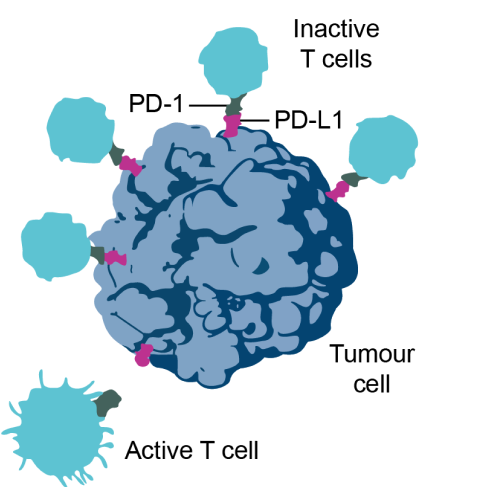
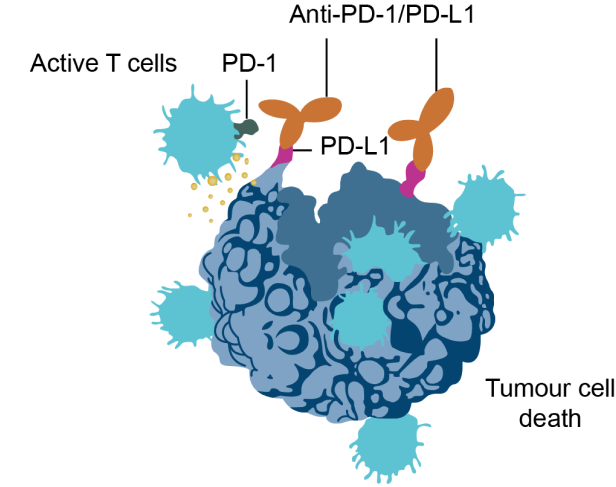
The PD-1/PD-L1 pathway is an important checkpoint used by tumour cells to inhibit antitumour immune responses.42 In-vitro assessment suggests that PD-L1 can be overexpressed by lung cancer cells through the actions of surrounding cytokines, which prevents T-cell-mediated tumour cell elimination.43–45 PD-1/PD-L1 inhibitors are effective therapies in tumours with high PD-L1 expression since the interaction between immune cell PD-1 and tumour cell PD-L1 is prevented, thus promoting a natural immune response against the tumour.43

The role of PD-L1 testing for immunotherapy

Veeva ID: Z4-60139 | Date of preparation: January 2024

The role of PD-L1 testing for immunotherapy

Professor Patrick Pauwels (Professor of Molecular Oncopathology, University of Antwerp, Belgium) discusses how PD-L1 testing can be used to predict response to immunotherapy. 

Play video

Mechanism of action of anti-PD-L1 therapy

PD-L1 expression leads to immune cell evasion

Anti-PD-1/PD-L1 reverses immune suppression

Mechanism of action of anti-PD-L1 therapy

PD-L1 expression leads to immune cell evasion

Active tumour cell

Anti-PD-1/PD-L1 reverses immune suppression

Tumour cell death

Figure adapted from Peters, et al. 201942

PD-1, programmed cell death-1; PD-L1, programmed cell death ligand-1

PD-L1 expression leads to immune cell evasion

Active tumour cell

Anti-PD-1/PD-L1 reverses immune suppression

Tumour cell death

Figure adapted from Peters, et al. 201942

PD-1, programmed cell death-1; PD-L1, programmed cell death ligand-1

When do I test?

It is recommended that biomarker testing should occur at the initial disease diagnosis and during disease progression.21,28 Typically, biomarker testing is oncologist-led, and occurs following the establishment of a pathological diagnosis and an MDT discussion. However, with the agreement of the MDT, a pathologist may initiate biomarker testing; this practice is referred to as reflex testing.46 Reflex testing is recommended as an optimal strategy to ensure that patients are tested in a timely manner.46, 47

For more information on the clinical utility, considerations, and challenges associated with reflex testing in NSCLC, watch the panel discussions below to hear from experts Prof. Brendon Stiles (Professor and Chief, Thoracic Surgery and Surgical Oncology, Department of Cardiothoracic & Vascular Surgery at Montefiore-Einstein, New York, US), Prof. Marina Garassino (Professor of Medicine at the University of Chicago, Chicago, US), Prof. John Gosney (Professor of Thoracic Pathology, Royal Liverpool University Hospital and University of Liverpool, Liverpool, UK), and Dr Juan Botero (Interventional Pulmonologist, Clínica Cardio VID, Medellín, Colombia).

Implementation of reflex testing may enhance patient care, and improve ways of working in clinical institutions

Veeva ID: Z4-61368 | Date of preparation: January 2024

Reflex testing: what it is & the clinical utility it provides

Play video

The panel provide an introduction to reflex testing, and share how the implementation of reflex testing may enhance patient care, and improve ways of working in clinical institutions.

The experts discuss how the multidisciplinary team can work together to implement effective sample acquisition, and tissue stewardship practices.

Veeva ID: Z4-61369 | Date of preparation: January 2024

Reflex testing: practical considerations
around implementation

Play video

The panel reflect on their experience with implementing reflex testing in their institutions. With a focus on the use of reflex testing in early-stage NSCLC, the experts discuss how the multidisciplinary team can work together to implement effective sample acquisition, and tissue stewardship practices.

Discussion on how to overcome challenges related to reflex testing, including sample acquisition,
and test reimbursement

Veeva ID: Z4-61370 | Date of preparation: January 2024

Reflex testing: challenges and solutions

Play video

The experts conclude the discussion by sharing their perspectives on how to overcome challenges related to reflex testing, including sample acquisition,
and test reimbursement.

ctDNA from blood (plasma) may be considered if a tumour sample cannot be obtained.21

In some cases, such as patients with EGFR mutations, a tumour rebiopsy at disease progression is recommended in order to guide future treatment decisions.28

Two stages of disease management
that use biomarker testing to inform treatment decisions

Initial testing (diagnosis)

Used to identify tumours with biomarkers that would make them more sensitive to certain treatments21, 28

Patients with NSCLC harbouring a targetable biomarker may derive a greater benefit from targeted therapies (e.g. IO) compared with non-targeted therapies (e.g. CTx)21

Testing on progression

Used to identify resistance biomarkers in patients who progress on treatment

Identification of resistance biomarkers at disease progression can inform the next treatment decision28

ABBREVIATIONS:

CTx, chemotherapy; IO, immunotherapy, NSCLC, non-small cell lung cancer

Results of such biomarker tests inform treatment decisions, therefore notifying the patient of results should be done in a timely manner. For example, it is suggested that the turnaround time to get available results from a requested mutational test should be less than ten working days.26

Biomarker testing and treatment guidelines

NSCLC biomarker testing and treatment guidelines, including those from ASCO, an Asian expert consensus, CAP-IASLC-AMP, CSCO-ESMO, ESMO, National Comprehensive Cancer Network® (NCCN®) and SEOM-SEAP suggest that all patients with advanced/metastatic NSCLC should undergo biomarker testing.21,22,27-29,31–33,48 Some guidelines, including those from an Asian expert consensus, ESMO, NCCN and SEOM-SEAP recommend biomarker testing for early-stage NSCLC.20–22,31

Treatment recommendations for a patient with NSCLC reflect the benefit of targeting the genetic abnormality driving the disease, where any is detected.21,28 It has been shown that some tumours harbouring genetic mutations also express PD-L1 and treatment with PD-1/PD-L1 inhibitors in these patients is associated with low response rates.49 Therefore, it is recommended that targeted therapy against the genetic abnormality should take precedence over treatment with PD-1/PD-L1 therapies.21
Establishing the status of all relevant lung biomarkers before initiating treatment is essential.

Dr Federico Cappuzzo - discusses the importance of obtaining all biomarker test results before starting treatment for NSCLC

Veeva ID: Z4-60054 | Date of preparation: December 2023

The importance of obtaining all biomarker test results before starting treatment for NSCLC

Dr Federico Cappuzzo (Department of Oncology-Hematology, AUSL della Romagna, Ravenna, Italy) discusses the importance of obtaining all biomarker test results before starting treatment for NSCLC.

Play video

Please refer to your local guidelines for guidance on treatment and management options in NSCLC

  • North America
  • ASCO
  • CAP-ACP
  • CAP-IASLC-AMP
  • NCCN
  • Asia
  • Asian expert consensus
  • CSCO-ESMO
  • Europe
  • ESMO
  • SEOM-SEAP

Welcome to the iD LUNG website

Access to the iD Lung website is for non-US healthcare professionals, and is of particular relevance for medical oncologists, pathologists and the surgical team.

By clicking on the link below, you declare and confirm that you are a non-US healthcare professional.

Access the site

Patients or members of the public

This website is intended for healthcare professionals only. Please speak to your healthcare provider if you require further information on lung cancer.

Media

If you are a member of the press, please contact the AstraZeneca Press Office.

Content

The content of this website is not exhaustive and should not be used as a substitute for the information provided by the manufacturers of the diagnostic assays. For specific guidance on testing protocols, please consult the package insert provided with each diagnostic test.

ABBREVIATIONS:
ALK, anaplastic lymphoma kinase; AMP, Association for Molecular Pathology; ASCO, American Society of Clinical Oncology; BRAF, B-Raf proto-oncogene; CAP, College of American Pathologists; CAP-ACP, Canadian Association of Pathologists-Association Canadienne Des Pathologistes; CSCO, Chinese Society of Clinical Oncology; CTx, chemotherapy; ctDNA, circulating tumour DNA; EGFR(m), epidermal growth factor receptor (mutation-positive); EML4, EMAP like 4; ERK, extracellular signal-regulated kinase; ESMO, European Society for Medical Oncology; GTP, guanosine triphosphate; HER2, human epidermal growth factor receptor 2; IASLC, International Association for the Study of Lung Cancer; IO, immunotherapy; KEAP1, Kelch-like ECH-associated protein 1; KRAS, Kirsten rat sarcoma virus; MAPK, mitogen activated protein kinase; MDT, multidisciplinary team; MET, MET proto-oncogene, receptor tyrosine kinase; mNSCLC, metastatic non-small cell lung cancer; MPR, major pathological response; MRD, minimal residual disease; MSI, microsatellite instability; NCCN, National Comprehensive Cancer Network; NSCLC, non-small cell lung cancer; NTRK1/2/3, neurotrophic receptor tyrosine kinase 1/2/3; pCR, pathological complete response; PD-1, programmed cell death-1; PD-L1, programmed cell death ligand-1; RET, rearranged during transfection; ROS1, ROS proto-oncogene 1; SEAP, Spanish Society of Pathology; SEOM, Spanish Society of Medical Oncology; STK11, serine/threonine kinase 11; TKI, tyrosine kinase inhibitor; TMB, tumour mutational burden

REFERENCES:

  1. Lim C, et al. Biomarker testing and time to treatment decision in patients with advanced non small-cell lung cancer. Ann Oncol 2015;26:1415–21.
  2. Zhang Y-L, et al. The prevalence of EGFR mutation in patients with non-small cell lung cancer: a systematic review and meta-analysis. Oncotarget 2016;7:78985–93.
  3. Melosky B, et al. Worldwide Prevalence of Epidermal Growth Factor Receptor Mutations in Non-Small Cell Lung Cancer: A Meta-Analysis. Mol Diagn Ther 2022;26:7–18.
  4. Chevallier M, et al. Oncogenic driver mutations in non-small cell lung cancer: Past, present and future. World J Clin Oncol 2021;12:217–37.
  5. Du X, et al. ALK-rearrangement in non-small-cell lung cancer (NSCLC). Thorac Cancer 2018;9:423–30.
  6. Bergethon K, et al. ROS1 rearrangements define a unique molecular class of lung cancers. J Clin Oncol 2012;30:863–70.
  7. Lin Q, et al. The association between BRAF mutation class and clinical features in BRAF-mutant Chinese non-small cell lung cancer patients. J Transl Med 2019;17:298.
  8. Brustugun OT, et al. BRAF-mutations in non-small cell lung cancer. Lung Cancer 2014;84:36–8.
  9. Cardarella S, et al. Clinical, pathologic, and biologic features associated with BRAF mutations in non-small cell lung cancer. Clin Cancer Res 2013;19:4532–40.
  10. Wang M, et al. Toward personalized treatment approaches for non-small-cell lung cancer. Nat Med 2021;27:134–56.
  11. Arbour KC, et al. Treatment Outcomes and Clinical Characteristics of Patients with KRAS-G12C–Mutant Non–Small Cell Lung Cancer. Clin Cancer Res 2021;27:2209–15.
  12. Awad MM, et al. MET Exon 14 Mutations in Non-Small-Cell Lung Cancer Are Associated With Advanced Age and Stage-Dependent MET Genomic Amplification and c-Met Overexpression. J Clin Oncol 2016;34:721–30.
  13. Wang R, et al. RET fusions define a unique molecular and clinicopathologic subtype of non-small-cell lung cancer. J Clin Oncol 2012;30:4352–9.
  14. Garrido-Castro AC, Felip E. HER2 driven non-small cell lung cancer (NSCLC): potential therapeutic approaches. Transl Lung Cancer Res 2013;2:122–7.
  15. Farago AF, et al. Clinicopathologic Features of Non-Small-Cell Lung Cancer Harboring an NTRK Gene Fusion. JCO Precis Oncol 2018;2:PO.18.00037.
  16. Wakelee HA, et al. KEYNOTE-671: Randomized, double-blind, phase 3 study of pembrolizumab or placebo plus platinum-based chemotherapy followed by resection and pembrolizumab or placebo for early stage NSCLC. J Clin Oncol;2023;41(Suppl. 17):LBA100 (abstr).
  17. Forde PM, et al. Neoadjuvant Nivolumab plus Chemotherapy in Resectable Lung Cancer. N Engl J Med 2022;386:1973–85.
  18. Heymach JV, et al. AEGEAN: A phase 3 trial of neoadjuvant durvalumab + chemotherapy followed by adjuvant durvalumab in patients with resectable NSCLC. Cancer Res 2023;83(Suppl. 8):CT005 (abstr).
  19. Aggarwal C, et al. Prevalence of PD-L1 expression in patients with non-small cell lung cancer screened for enrollment in KEYNOTE-001, -010, and -024. Ann Oncol 2016;27(Suppl. 6):vi359–78.
  20. Remon J, et al. Early and locally advanced non-small-cell lung cancer: an update of the ESMO Clinical Practice Guidelines focusing on diagnosis, staging, systemic and local therapy. Ann Oncol 2021;32:1637–42.
  21. Referenced with permission from the NCCN Clinical Practice Guidelines in Oncology (NCCN Guidelines®) for Non-Small Cell Lung Cancer V.11.2024. © National Comprehensive Cancer Network, Inc. 2024. All rights reserved. Accessed October 28, 2024. To view the most recent and complete version of the guideline, go online to NCCN.org. NCCN makes no warranties of any kind whatsoever regarding their content, use or application and disclaims any responsibility for their application or use in any way.
  22. Mitsudomi T, et al. Expert Consensus Recommendations on Biomarker Testing in Metastatic and Nonmetastatic NSCLC in Asia. J Thorac Oncol 2023;18:436–46.
  23. Blumenthal GM, et al. Current Status and Future Perspectives on Neoadjuvant Therapy in Lung Cancer. J Thorac Oncol 2018;13:1818–31.
  24. Xia J, et al. Circulating tumor DNA minimal residual disease in clinical practice of non-small cell lung cancer. Expert Rev Mol Diagn 2023;23:913–24.
  25. Waldeck S, et al. Early assessment of circulating tumor DNA after curative‐intent resection predicts tumor recurrence in early‐stage and locally advanced non‐small‐cell lung cancer. Mol Oncol 2022;16:527–37.
  26. Lindeman NI, et al. Updated molecular testing guideline for the selection of lung cancer patients for treatment with targeted tyrosine kinase inhibitors: guideline from the College of American Pathologists, the International Association for the Study of Lung Cancer, and the Association for Molecular Pathology. Arch Pathol Lab Med 2018;142:321–46.
  27. Hendriks LE, et al. Non-oncogene-addicted metastatic non-small-cell lung cancer: ESMO Clinical Practice Guideline for diagnosis, treatment and follow-up. Ann Oncol 2023;34:358–76.
  1. Hendriks LE, et al. Oncogene-addicted metastatic non-small-cell lung cancer: ESMO Clinical Practice Guideline for diagnosis, treatment and follow-up. Ann Oncol 2023;34:339–57.
  2. Singh N, et al. Therapy for Stage IV Non–Small-Cell Lung Cancer With Driver Alterations: ASCO Living Guideline. J Clin Oncol 2022;40:3310–22.
  3. Singh N, et al. Therapy for Stage IV Non–Small-Cell Lung Cancer Without Driver Alterations: ASCO Living Guideline. J Clin Oncol 2022;40:3323–43.
  4. Isla D, et al. New update to the guidelines on testing predictive biomarkers in non-small-cell lung cancer: a National Consensus of the Spanish Society of Pathology and the Spanish Society of Medical Oncology. Clin Transl Oncol 2023;25:1252–67.
  5. Cheung CC, et al. Fit-for-purpose PD-L1 biomarker testing for patient selection in immuno-oncology: guidelines for clinical laboratories from the Canadian Association of Pathologists-Association Canadienne Des Pathologistes (CAP-ACP). Appl Immunohistochem Mol Morphol 2019;27:699–714.
  6. Wu YL, et al. Pan-Asian adapted clinical practice guidelines for the management of patients with metastatic non-small-cell lung cancer: a CSCO-ESMO initiative endorsed by JSMO, KSMO, MOS, SSO and TOS. Ann Oncol 2019;30:171–210.
  7. Hsu WH, et al. Overview of current systemic management of EGFR-mutant NSCLC. Ann Oncol 2018;29(Suppl. 1):i3–9.
  8. Leonetti A, et al. BRAF in non-small cell lung cancer (NSCLC): pickaxing another brick in the wall. Cancer Treat Rev 2018;66:82–94.
  9. Kwan AK, et al. The path to the clinic: a comprehensive review on direct KRASG12C inhibitors. J Exp Clin Cancer Res 2022;41:27.
  10. Fujino T, et al. Lung Cancer with MET exon 14 Skipping Mutation: Genetic Feature, Current Treatments, and Future Challenges. Lung Cancer (Auckl) 2021;12:35–50.
  11. Andrini E, et al. Non-small-cell lung cancer: how to manage RET-positive disease. Drugs Context 2022;11:1–5.
  12. Cordeiro De Lima VC, et al. STK11 and KEAP1 mutations in non-small cell lung cancer patients: Descriptive analysis and prognostic value among Hispanics (STRIKE registry-CLICaP). Lung Cancer 2022;170:114–21.
  13. Shire NJ, et al. STK11 (LKB1) mutations in metastatic NSCLC: Prognostic value in the real world. PLoS ONE 2020;15:e0238358.
  14. Papillon-Cavanagh S, et al. STK11 and KEAP1 mutations as prognostic biomarkers in an observational real-world lung adenocarcinoma cohort. ESMO Open 2020;5:e000706.
  15. Peters S. et al. Tumor mutational burden (TMB) as a biomarker of survival in metastatic non-small cell lung cancer (mNSCLC): blood and tissue TMB analysis from MYSTIC, a phase III study of first-line durvalumab ± tremelimumab vs chemotherapy. Abstract presented at AACR Annual Meeting 2019 (Abstract CT074).
  16. Kim H, Chung JH. PD-L1 testing in non-small cell lung cancer: past, present, and future. J Path Transl Med 2019;53:199–206.
  17. Chen S, et al. Mechanisms regulating PD-L1 expression on tumor and immune cells. J Immunother Cancer 2019;7:305.
  18. Lastwika KJ, et al. Control of PD-L1 Expression by Oncogenic Activation of the AKT-mTOR Pathway in Non-Small Cell Lung Cancer. Cancer Res 2016;76:227–38.
  19. Gosney JR, et al. Pathologist-initiated reflex testing for biomarkers in non-small-cell lung cancer: expert consensus on the rationale and considerations for implementation. ESMO Open 2023;8:101587.
  20. Passaro A, et al. ESMO expert consensus statements on the management of EGFR mutant non-small-cell lung cancer. Ann Oncol 2022;33:466–87.
  21. Kalemkerian GP, et al. Molecular Testing Guideline for the Selection of Patients With Lung Cancer for Treatment With Targeted Tyrosine Kinase Inhibitors: American Society of Clinical Oncology Endorsement of the College of American Pathologists/International Association for the Study of Lung Cancer/Association for Molecular Pathology Clinical Practice Guideline Update. J Clin Oncol 2018;36911–19.
  22. Gainor JF, et al. EGFR mutations and ALK rearrangements are associated with low response rates to PD-1 pathway blockade in non-small cell lung cancer: a retrospective analysis. Clin Cancer Res 2016;22:4585–93.

iD.Lung.com

  • Introduction
  • Biomarker Testing in Lung Cancer
  • Technical Considerations
  • iD Podcasts
  • Resources & Links
  • FAQs
  • Contact Us
  • Legal Notice
  • Privacy Policy
  • Cookies
AstraZeneca Logo

©AstraZeneca 2024
FOR HEALTHCARE PROFESSIONAL USE ONLY
Veeva Document ID: Z4-60052 | Date of preparation: September 2024